
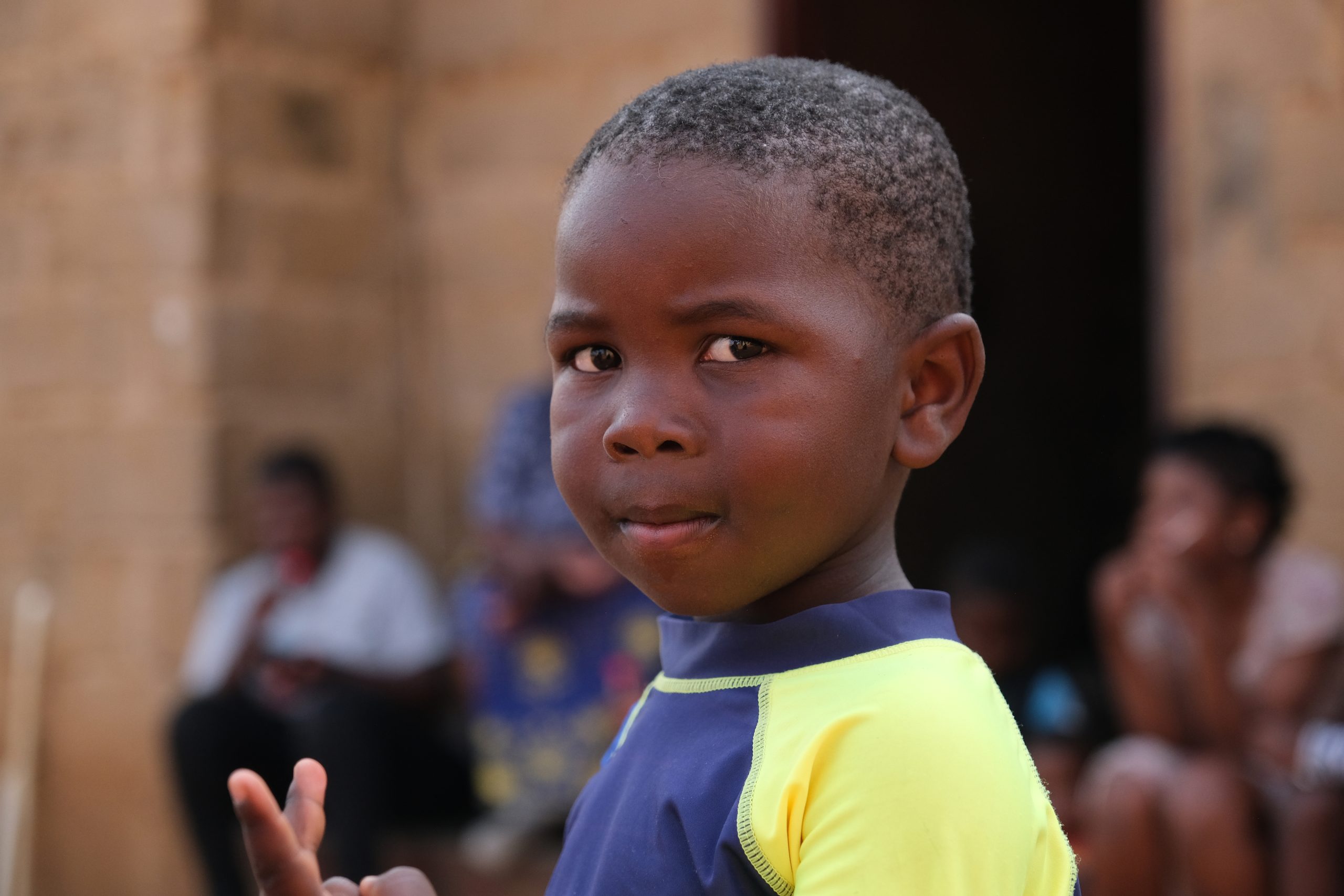
More than half of Eswatini’s entire population is under 25 years old. The median age in this country of 1.27 million people is 22.7 years — one of the youngest population profiles of any nation on earth. That is a striking number on its own, but the reason behind it is what matters most.
Eswatini carries the highest HIV prevalence rate in the world. For decades, the epidemic swept through a generation of adults — parents, grandparents, the people who would otherwise have been raising the children now growing up across this small, landlocked kingdom in southern Africa. The youth population isn’t large simply because birth rates are high. It is large, in part, because the adults who would have balanced it are gone.
That is the context in which we work. And it is the context in which over 460 children at Project Canaan are growing up today.
A Crisis That Didn’t Happen Overnight
By 1999, an estimated 112,000 children in Eswatini were classified as orphaned or vulnerable — nearly one quarter of all children in the country at the time. Approximately 70 percent of Swazi orphans had lost their parents to AIDS-related causes. Extended families absorbed as much of this loss as they could. Grandmothers (Gogos) raised grandchildren, older siblings became primary caregivers before finishing primary school and entire households restructured around an absence that was never supposed to be there.
That reality didn’t disappear as HIV treatment improved. The structural damage done to families, communities, and support systems over those decades continues to show up in children who have no one to care for them, in households stretched beyond their capacity, and in the steady arrival of babies into Eswatini’s social welfare system with no available home.
Add to this an unemployment rate of approximately 70 percent, and the picture becomes clearer: this is not a country where poverty is the result of individual circumstances. It is the result of a crisis that dismantled the structures families depend on, and that continues to create vulnerable children long after the peak of the epidemic has passed.
What We Built in Response
When our co-founders, Ian and Janine Maxwell, stood on 2,500 acres of virgin land in Eswatini in 2009 and dedicated it as Project Canaan: A Place of HOPE, they weren’t launching a program. They were building a community. A home. A place where the children falling through the gaps of a broken system could land somewhere safe and stay.
Every child who comes to Project Canaan is placed through the Eswatini social welfare system under a formal court order. Every child arrives before the age of two. Every child has no other available option. These are the children for whom no alternative exists, and Project Canaan was built to be exactly that alternative.
Today, more than 460 children call this place home. And what that place has become is something that could not have been imagined when the first child arrived in 2012.
A Village That Grows With Its Children
Project Canaan is not a facility or an institution. It is a living, breathing, expanding community that is physically built around the children who live in it, growing and changing as they do.
When a baby arrives, they come home to the El Roi baby home, named from the Hebrew phrase meaning “The God who sees.” From there, as they grow, they move into the toddler home, and then into the Emseni homes, where children live together in family-style houses with consistent caregivers (who are called “aunties” and “uncles”) who know them, stay with them, and help raise them.
Emseni 1 houses 20 boys and 20 girls. As children grow older, they move through Emseni 2 and 3 (where boys and girls are in their own homes, each home housing 40 children) and continue up through the campus. Today, we have built through Emseni 10, and we keep building. Every new home constructed creates space for another wave of babies to come in, which means the community doesn’t reach a fixed capacity and stop, rather it expands to meet the need.
This is not how most institutions work, but it is how families work. You make room.
Project Canaan Academy, our on-property school, follows the same logic. It currently teaches through Grade 8 because the oldest children in our care are 15. As they age, the school adds a new grade level. The classrooms are built for the students who will walk into them. The community is always one step ahead of the children, ready for whoever they are becoming.
A Generation That Can Break the Cycle
There is something important that the demographic statistics about Eswatini don’t capture: what happens when children who were born with nothing are given everything they need to become incredible members of society?
The children at Project Canaan are growing up with stable homes, consistent caregivers, a real education, nutritious food, and a community that invests in who they are as individuals. They are learning what it means to show up for each other, to take responsibility, to contribute to something larger than themselves. They understand family — not as an abstract concept, but as a daily lived experience.
When these children eventually re-enter Eswatini as young adults, they will carry something that very few people in their country have had the chance to build: a foundation. A sense of self. An understanding of what a stable, functioning community looks like from the inside.
We are raising a generation of Swazis who know what it feels like to be cared for, and who have the tools to pass that forward. In a country where poverty has been structural and generational, that is not a small thing. That is how cycles break.
Why This Matters Right Now
Eswatini’s youngest population didn’t become this way by accident, and it won’t recover from its losses without sustained, long-term investment in the children who are growing up right now. The city on a hill we are building at Project Canaan is one answer to that need — specific, grounded, and committed for the long term.
This month, we are running our annual fundraising campaign. But this year, instead of asking for support in purchasing diapers and baby items, what we are asking for now is support for everything else — the full, unglamorous, essential cost of raising 460 children well.
If you would like to be part of that, we would love to have you.
→ Support the children at Project Canaan this month
To follow the ongoing story of Project Canaan and the children growing up here, subscribe to our newsletter below.