
In September 2001, Heart for Africa co-founder, Janine Maxwell, was sitting at a hotel conference room in New York City when the first tower was hit. Her husband and co-founder, Ian, was on a flight to Chicago, and they didn’t know if each other was alive.
She couldn’t have known then that what happened that morning would set in motion a journey that would eventually lead Heart for Africa to purchase 2,500 acres of land in a tiny kingdom in southern Africa, welcome the first child on a cold March morning in 2012, and build a community that today is home to over 460 children who had nowhere else to go.
Twenty years ago, on February 1, 2006, Heart for Africa was born. This is a reflection on the journey since.
It Started With a Plane Ticket
Before there was Project Canaan, before there was Heart for Africa, there was Janine on a plane to Africa for the first time.
It was April 2003. She had run a successful marketing company in Toronto for thirteen years. She had a beautiful home, wonderful husband and two young children, and no particular reason to go to Kenya. But she went. And when she came home, she couldn’t stay.
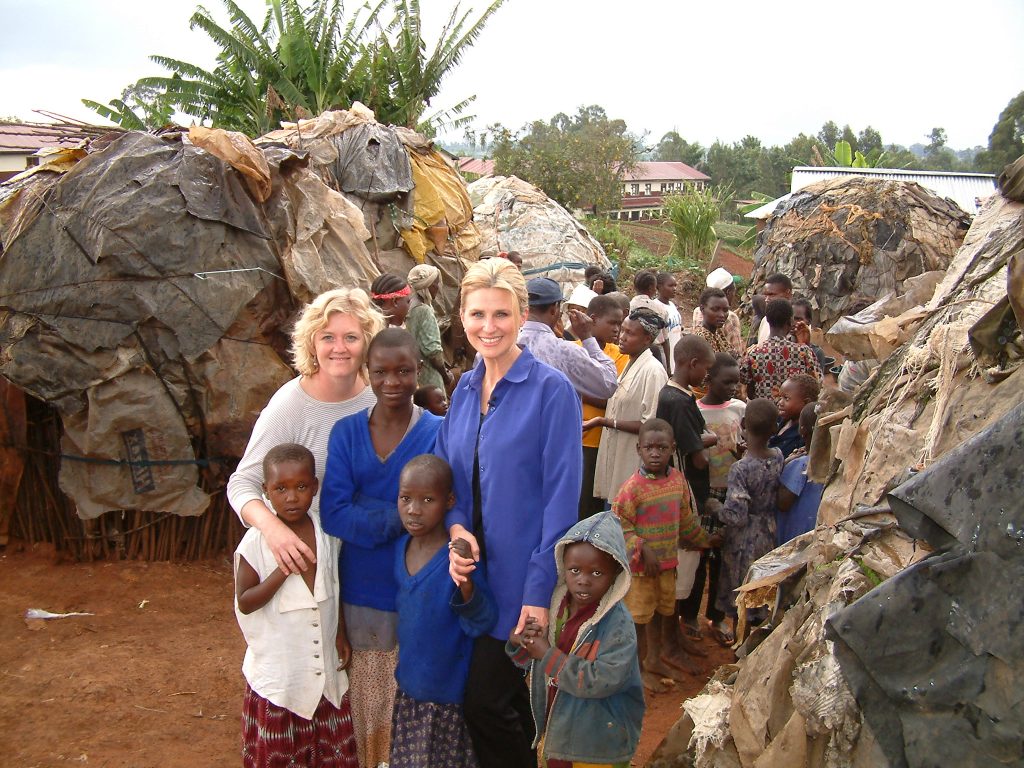
She returned to her office the morning after landing and stood in the coffee room, surrounded by colleagues asking how the trip was. She couldn’t find words for what she’d seen in the slums of Nairobi or the children’s homes of Eldoret. What she knew was that she couldn’t keep selling sugar cereal while millions of children were living on the street or dying. Two years later, she and Ian closed their company, packed up their lives, and went to Africa together – this time with their ten-year-old son, Spencer, and eight-year-old daughter, Chloe, in tow.
Those early years were not easy. The Maxwell family spent nine weeks in 2005 moving eleven times between Swaziland, Malawi, Kenya and South Africa as volunteers with a ministry called Dream for Africa. Ian led a pastor’s conference for 600 Swazi pastors. Janine wrote a week-long newspaper series on AIDS and the church for the Swazi Observer. They planted gardens, helped lead teams, and met close to 2,000 new people in nine weeks. Spencer celebrated his eleventh birthday in Swaziland. Chloe turned nine in South Africa. They slept wherever they were sent and ate whatever was on the table.
In January 2006, Ian stood at the front of a church in Ontario while a mentor publicly placed the mantle of the ministry on his shoulders and prayed over him. One month later, on February 1, 2006, they renamed the organization. Dream for Africa became Heart for Africa, and the mission became HOPE: fighting Hunger, caring for Orphans, decreasing Poverty, and providing Education. In Janine’s words, that was the day the “heart” began to beat.
Across Four Countries, One Village at a Time
Heart for Africa’s first years were wide and busy. Our teams traveled to Kenya, Malawi, South Africa, and Eswatini (called Swaziland at that time) planting gardens, building classrooms, repairing rooftops, running medical and dental outreach, and walking alongside communities doing the hard daily work of caring for the most vulnerable.
By 2007, volunteer teams had planted gardens at 95% of rural homes in Swaziland. Volunteers fenced properties by digging postholes by hand. They painted murals in children’s homes and taught teenagers to shave for the first time. They sat with gogos, grandmothers raising grandchildren after losing their own children to AIDS, and prayed with them.
By the time Janine’s second book was published in 2009, more than 4,500 people from ages 3 to 90 had traveled to Africa with them. Volunteers came from churches and schools and neighborhoods across North America. Many came back. Some came back every year. One volunteer named Dan Nisly first set foot on Swazi soil in 2006 and gave years of his life to this work. He passed away on June 19, 2009, just two days before the most significant day in our organization’s history: the dedication of Project Canaan. This was the day we named our land A Place of HOPE and made a promise we intended to keep.
The Land
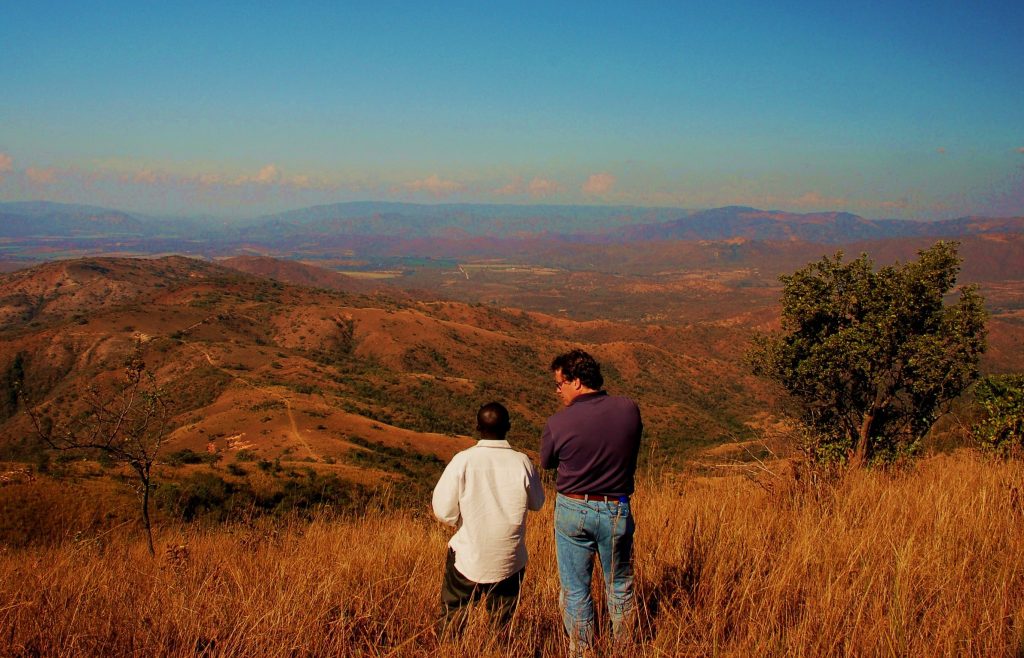
Ian had been carrying a vision he couldn’t quite explain. A piece of land in Eswatini. Thousands of acres. A dairy. Vegetable fields. Children everywhere. Janine thought he was having a mid-life crisis and suggested he buy a red sports car instead.
But he wasn’t having a crisis. He was hearing from God.
In 2008, a man walked into one of our Heart for Africa meetings unexpectedly. Halfway through, he began to describe a vision he said the Lord had given him of rolling hills, fields of vegetables, a dairy, vocational training, and children who needed homes. Janine started to cry. Ian looked at her, and then back at the man. The man didn’t know about the land, but later wrote a personal check for $1 million USD for Heart for Africa to purchase it.
The purchase was almost derailed at the last moment when they discovered the 2,500-acre property had no road access. The adjacent land was owned by one of the Kingdom’s many Princes. Lawyers worked through Swazi law. Eventually, the problem was solved the African way: two oxen were delivered to the Prince in exchange for an easement. The deal was done.
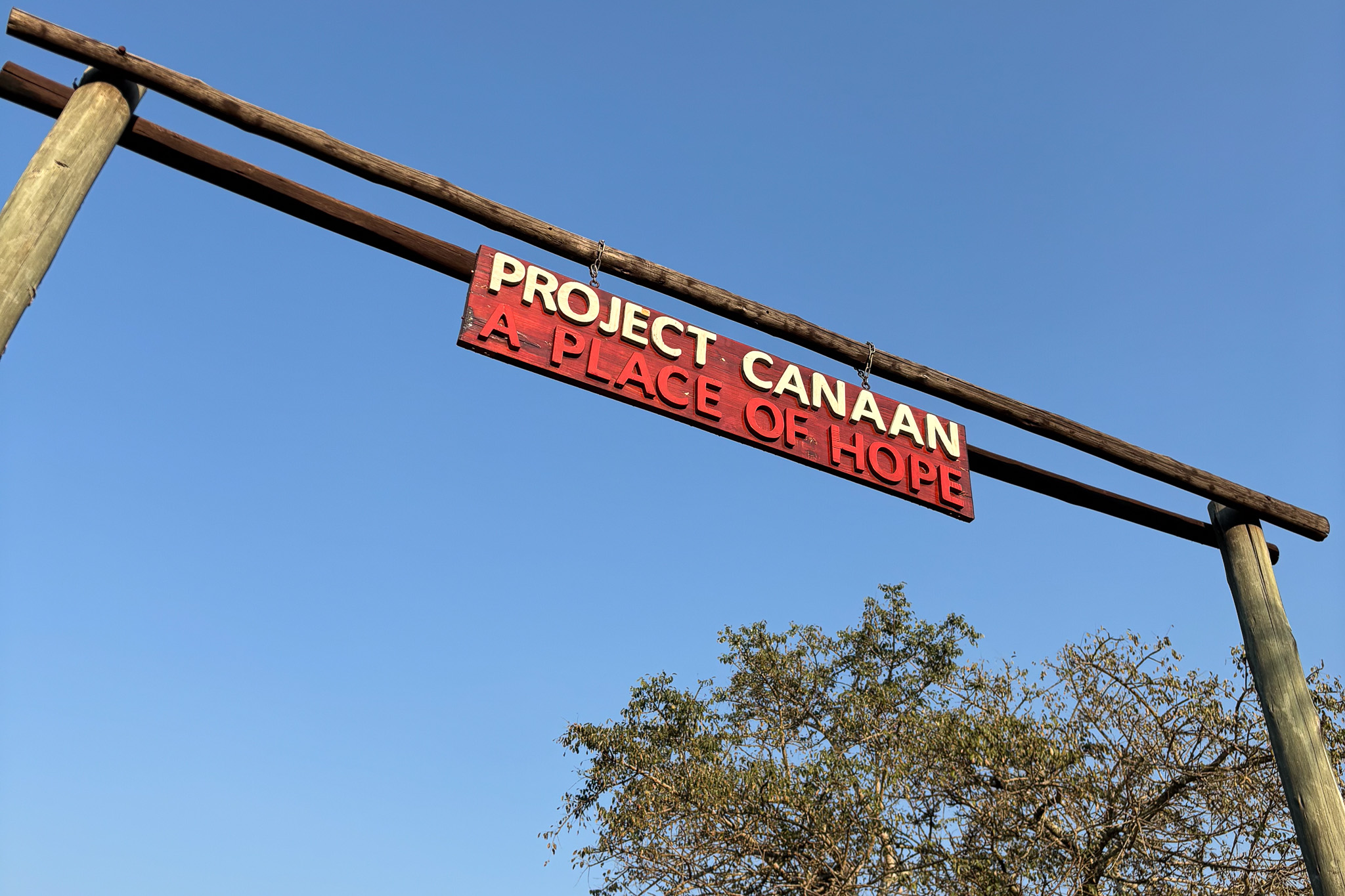
On Sunday, June 21, 2009, the land was officially dedicated and named Project Canaan: A Place of HOPE. It was raw African bush, as in… no roads, no water, no electricity, no buildings. Just land and a promise.
The First Child
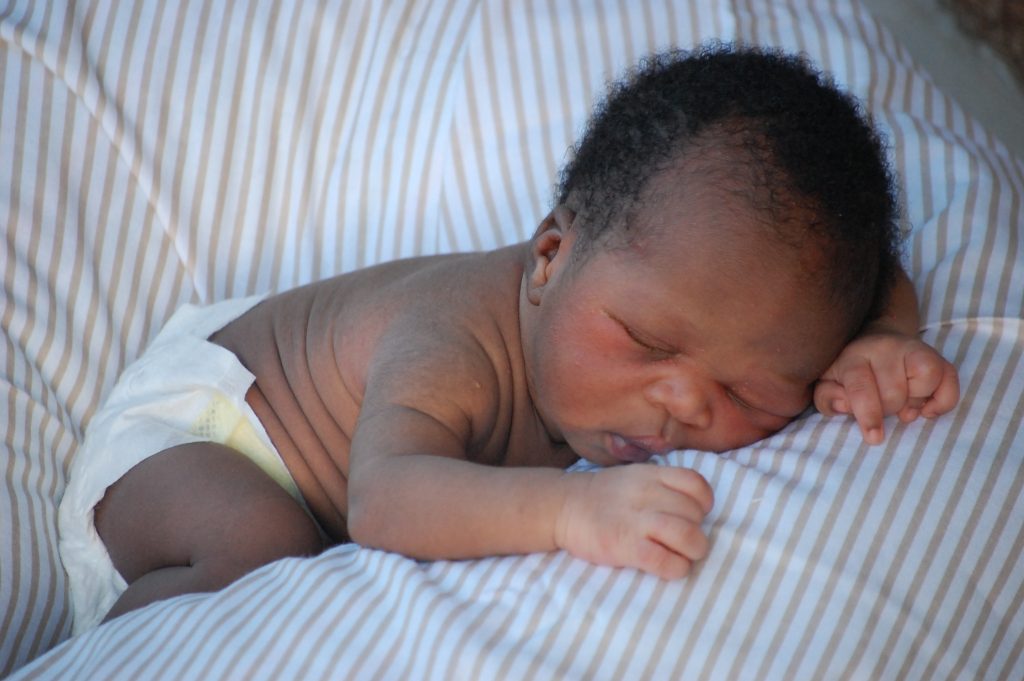
We spent the next two years clearing land, planting the first crops, building the first structures (including a home for abandoned babies), and preparing to receive babies. We hired staff. We built the El Roi baby home (named from the Hebrew phrase meaning “The God who sees”) and we waited.
On March 1, 2012, the call came. Ian was standing at the top of the mountain in Eswatini and Janine was in the United States. The baby home staff phoned to say that a baby boy had just arrived. Ian and Janine had prayed our first child would be a boy, so they could give him the name Joshua, the first person in the Old Testament to enter the Promised Land of Canaan after forty years of wandering in the desert.
His birth name was Melokuhle. They added Joshua. He was the first to enter the Promise Land, just like Joshua in the bible.
Three months later, on May 31, 2012, the Maxwell family packed up everything they owned and got on a plane to Swaziland. On June 1, 2012, they became residents of Swaziland, Africa. The next chapter had begun.
Joshua is very proud to tell every new visitor that he was the first child to arrive at Project Canaan. It’s a core part of his identity, and it should be. When the rebuilt chapel was dedicated in 2020 after a devastating fire the year before, it was Joshua who cut the ribbon.
What Twenty Years Has Built
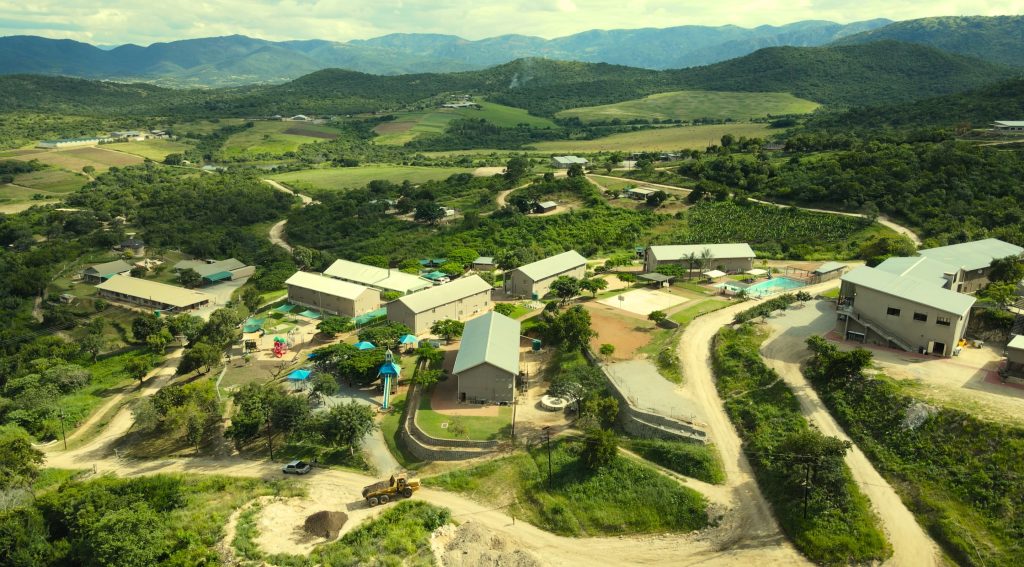
In 2012, there were 22 children at Project Canaan. By 2015 there were 105. By 2018 there were 216. Today, there are over 460 children growing up here, each placed through the Eswatini social welfare department, each arriving before the age of two, each with a formal court order and no other option available to them.
What surrounds them today would have been unimaginable on the day we dedicated that raw piece of land.
Project Canaan Academy, our on-property school, currently teaches through Grade 8. It grows every year, adding new classrooms and grade levels as our children grow. The oldest children are 15. The school will reach Grade 12 as they do, and around 2030, we will watch our first cohort graduate. Joshua will be among them.
The Khutsala Artisan Centre opened in 2012 and now provides employment for over 100 community members, producing hand-crafted wire and bead products sold wholesale to partners including Feed My Starving Children™, who have been with us since 2009. The full circle still moves us: Khutsala products are sold at FMSC packing sites, generating income that helps purchase the MannaPack™ meals shipped back to Project Canaan to feed children in our community.
Our egg barns, built in partnership with the Egg Farmers of Canada and the International Egg Foundation, houses over 6,000 laying hens across two barns, producing approximately 5,500 eggs every single day to feed children in our care and in the surrounding community.
Our agricultural operations produce vegetables exported to South Africa under GlobalGAP certification. Our vanilla project, organically grown in our on-property greenhouse, is delivering its first harvest next year, the beginning of what we hope will become a meaningful source of commercial revenue for the organization.
Over 400 people from the surrounding communities are employed at Project Canaan. Each supports an average of seven family members at home. The employment impact of this community extends to more than 2,800 people in the region.
The Bridge Program is being built for the day (coming around 2030) when our first children will turn 18. They will not be sent into the world alone. The Bridge will support them from 18 to 22, providing a structured pathway into employment, further education, or a vocational trade. We made a commitment to these children. It does not end when they become adults.
The Hard Parts
Twenty years is long enough to have learned some things the hard way.
We have had dairy operations fail. Farming seasons that cost more than they produced. Programs we believed in deeply that had to be paused because the numbers told us the truth. We have been robbed and lied to and hurt by people we loved. We have turned away babies during seasons when we simply could not say yes, and that has never stopped being the hardest thing we do.
We have also learned that transparency is not a weakness. When the donor climate shifted and decisions had to be made, we told our supporters the truth. They stayed. Most of them have stayed for years.
We have learned that the H, O, P, and E of our mission cannot be separated. A child who is hungry cannot learn. A community with 70% unemployment cannot sustain itself on goodwill alone. Everything we have built here exists because we refused to treat these four things as four separate problems. They are one.
And we have learned, above everything, that this kind of work requires time. Not a grant cycle. Not a season. Time. The kind that builds something real.
What Comes Next
This month, a group of our supporters is traveling to Eswatini to see Project Canaan with their own eyes. Some of them have been following this work for a decade or more. Some are coming for the first time. All of them are part of why this place exists.
The children growing up at Project Canaan today will be the young adults of the 2030s. Joshua will be among the first to graduate. The school will reach Grade 12 as they do. The sustainability initiatives we are building now (i.e. the vanilla harvest, the agricultural exports, the vocational training programs) are designed to ensure that Project Canaan can outlast any single funding cycle.
We have never believed this work was ours alone. It has always belonged to the thousands of people who have said “it’s not okay with me” and shown up anyway, on a plane, in a prayer, through a monthly gift, through twenty years of staying.
Twenty years is not the finish line. It is the foundation. And we are grateful, beyond words, for everyone who helped build it.
To support the next chapter of this work, the children, the community, and the mission of HOPE being built at Project Canaan, we invite you to join us.