

How Children Receive Education at Project Canaan
Education at Project Canaan is not confined to a classroom.
It happens in early childhood centers where young children begin learning structure and curiosity. It continues in classrooms where students work through reading, mathematics, science, and technology. And it extends far beyond the school day into gardens, kitchens, churches, and everyday life.
For the more than 460 children living on Project Canaan, 370 of which are currently enrolled in school at Project Canaan in 2026, education is not a single program. It is a system designed to prepare them for adulthood with both knowledge and practical life skills.
Understanding how this works requires looking at both formal education and the broader environment where children are learning every day.
What Education for Vulnerable Children in Africa Requires
Across many parts of Africa, access to education can be inconsistent. Even when children are enrolled in school, challenges such as overcrowded classrooms, limited resources, or instability at home can affect long-term outcomes.
Education, in this context, is not just about enrollment. It is about consistency, quality, and support systems that allow a child to continue learning over time.
At Project Canaan, education is one of the core pillars of the organization’s mission. It is part of the HOPE model that guides how children are raised within the project. This means education is not treated as an add-on. It is built into daily life, long-term planning, and the overall structure of care.
Inside Project Canaan Academy
At the center of formal education is Project Canaan Academy (PCA), the on-site school serving children from preschool through Grade 8, with plans to expand through Grade 12.
PCA is:
- A fully accredited independent Christian school
- Recognized by the Independent Schools Association of Southern Africa (ISASA)
- Recently awarded full accreditation by the Office of Independent Schools Evaluations, Southern Africa (OISESA)
Its guiding motto reflects its approach:
Growing Minds. Strengthening Faith. Shaping Futures.
Located within Project Canaan, the school primarily serves children on the project but also accepts students who can pay tuition. This creates a structured and stable learning environment while also connecting the school to the broader region.
Academic Foundation
Students move through a structured curriculum that includes literacy and language development, mathematics, science, social studies, technology and more.
In addition to core academics, Project Canaan Academy provides programs that allow children to explore creativity, leadership, and technical skills.
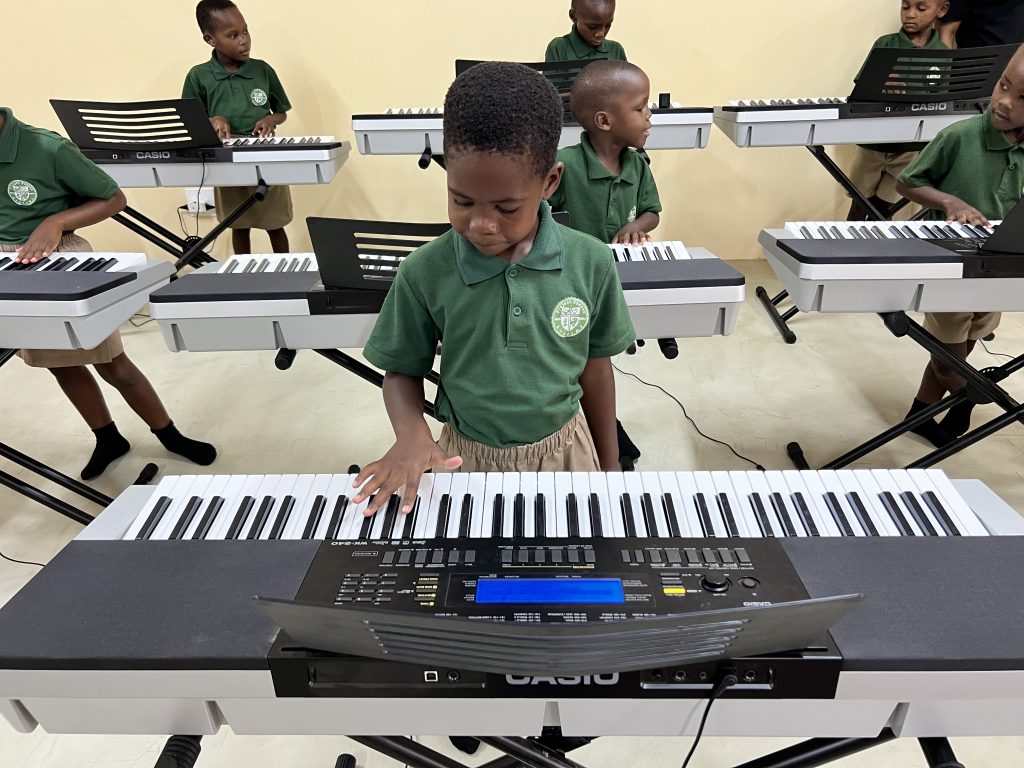
Music is a significant part of student life and students have opportunities to learn guitar, piano, choir and marimba! Marimba is a traditional percussion instrument that plays an important role in Eswatini’s cultural and educational environment.
Marimba music is commonly featured in school performances, community events, and festivals. Learning this instrument connects students to local culture while developing rhythm, coordination, and teamwork.
Students also engage in:
- Art programs that encourage creativity and expression
- Technology classes that introduce digital skills
- Character and leadership development programs
These areas are designed to complement academic learning and prepare students for a wide range of future paths.
The goal is not only to meet academic standards but to ensure students build the foundational skills needed for long-term learning.
As the school expands toward its first Grade 12 graduating class in 2030, the focus remains on consistency – ensuring each stage of education builds on the last.
Beyond the Classroom: A Broader Definition of Education
While formal schooling is essential, education at Project Canaan extends well beyond academic subjects. Children are part of a community where learning is integrated into everyday life.
Learning Through Agriculture and the Environment
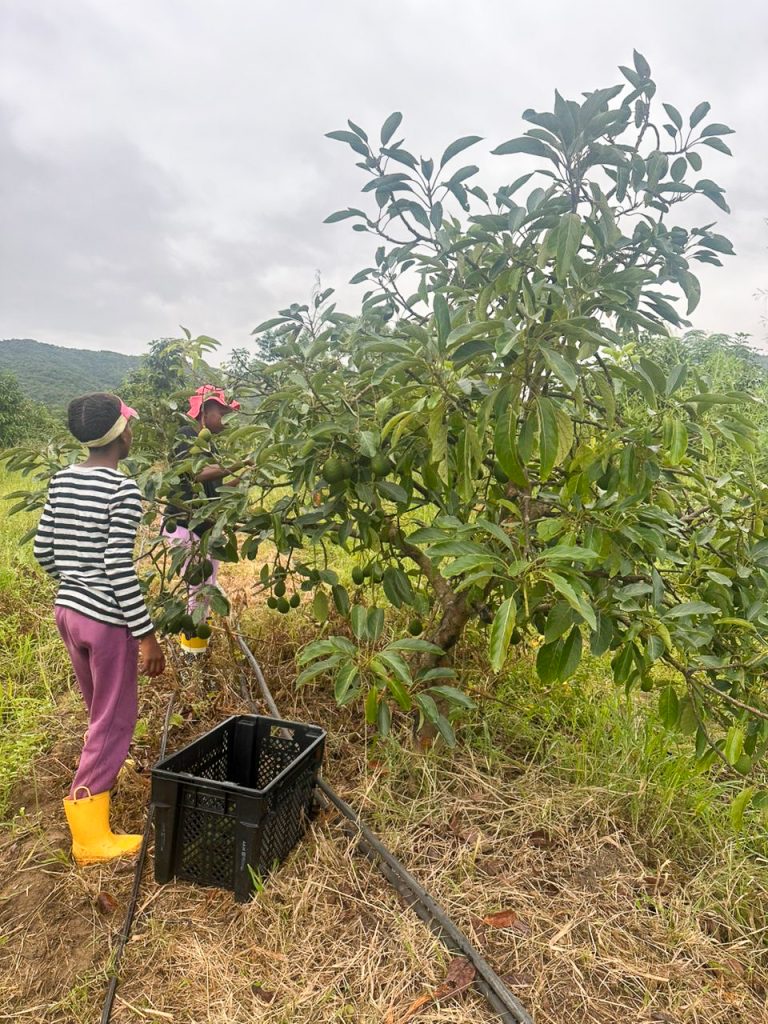
On the farm, children participate in hands-on experiences that teach how food is grown and managed. Whether picking avocados with the farm team or observing how crops are cultivated, they are learning:
- Where food comes from
- How agricultural systems work
- The discipline required to produce and harvest
These are practical lessons that connect directly to sustainability and daily life.
Learning Through Community Engagement
Education also happens through participation in outreach initiatives. The children take part in activities such as delivering food to homesteads and serving meals through feeding programs. All of these experiences help develop emotional intelligence with skills in awareness of others, responsibility and empathy.
Rather than being abstract ideas, these values are practiced in real situations.
Learning Faith and Spiritual Life
Faith is a defined, structured and important pillar of education at Project Canaan as our children are able to develop their faith through church services, bible classes and worship sessions.
This also provides a framework for understanding values, decision-making, and personal responsibility. It is not separate from education, rather it is integrated into how children grow and understand the world around them.
Learning Through Daily Relationships
Some of the most consistent learning happens in the children’s homes. The amazing caregivers (referred to as aunties and uncles) play a central role in helping children develop social skills, conflict resolution, respect for others and personal responsibility.
These daily interactions shape how children relate to others and navigate life beyond school.
Why a Well-Rounded Education Matters
Education at Project Canaan is intentionally designed to be comprehensive. Academic knowledge alone is not enough to prepare a child for adulthood. At the same time, life skills without a strong academic foundation can limit long-term opportunities.
By combining structured academics, practical life experience, spiritual development and creative / leadership opportunities the goal is to raise children who are prepared for the realities of adult life and equipped to make decisions, contribute to their communities, and continue learning beyond the classroom.
This reflects a broader understanding of what education requires in a long-term care environment.
Education as Part of Long-Term Care
At Project Canaan, education is not a short-term intervention. It is part of a long-term commitment to raising children into adulthood.
Children at Project Canaan are provided with a stable and loving home, daily meals, healthcare, consistent caregivers and access to education. These elements work together. Education is strengthened by stability, and stability allows education to continue over time.
This integrated approach is what allows learning to be consistent rather than interrupted.
Looking Ahead
As Project Canaan Academy continues to grow toward offering education through Grade 12, the focus remains the same: building a system where children can learn, develop, and prepare for the future in a structured and supportive environment.
Education, in this context, is not a single pathway. It is a combination of academic instruction, lived experience, and daily guidance.
Learn More
If you want to learn more about how education is integrated into daily life at Project Canaan, or how you can support the children in our care, we invite you to explore more on our website.
Education is one of the most important parts of how children are raised at Project Canaan and it is made possible through a community of people who choose to be part of that work.