
Whether you’ve given to a charity here and there over the years or you’re ready to find one you can really get behind, most people arrive at the same question eventually: how do I actually know this is going to make a difference?
It’s a question we hear often, and one we genuinely want to help you answer because it’s important to find an organization you align with and trust. We’ve been doing this work for twenty years and have found that these five questions help most donors answer this core question. Whether you’re giving locally, internationally, or still figuring out where you want to focus, you should feel confident about the charity you choose to support.
Here are five questions worth asking any charity before you support them, including us, along with what honest answers to each one actually look like.
- What cause do you actually care about, and how does this charity address it?
- Is this organization actually legitimate?
- Do they have real people doing real work on the ground?
- How much of my money actually reaches the work?
- Are they building something that lasts?
Let’s get into it.
1. What cause do you actually care about, and how does this charity address it?
The best place to start isn’t with paperwork or ratings, it’s with yourself. Before anything else, think about what actually moves you. Whether that’s children who need care and stability, access to clean water, education for communities that don’t have it, medical support, food security, or something else entirely. There are extraordinary organizations working on all of these things, and the one worth your long-term support is the one working on what you genuinely care about.
Giving from a genuine sense of connection looks and feels different from giving from a place of guilt or because something crossed your feed at the right moment. When you find an organization whose mission lines up with what you care about, you stay with it longer, you follow the work more closely, and your support becomes something real over time rather than a one-time transaction.
Once you know what you care about, look for organizations that are specific about how they address it. Vague mission statements like “empowering communities” or “creating lasting change” are worth questioning. The organizations doing serious work can usually tell you exactly what they do, where they do it, who benefits, and how. That specificity is a good early sign.
Our mission at Heart for Africa is built around four things that we believe are inseparable in Eswatini: fighting Hunger, caring for Orphans and vulnerable children, decreasing Poverty, and providing Education. We call it HOPE, and it drives everything we build at Project Canaan. That will resonate with some donors deeply and less with others, and that’s exactly how it should work.
2. Is this organization actually legitimate?
Once you find a mission you connect with, the next thing to do is verify that the organization behind it is real, registered, and accountable.
In the US, the baseline is 501(c)(3) status. It means the IRS has recognized the organization as a tax-exempt nonprofit; it files annual Form 990s that are publicly available, and your donation is tax-deductible. Any reputable nonprofit organization should be able to tell you their EIN immediately, and you should be able to look them up directly in the IRS Tax Exempt Organization Search.
Beyond that, Charity Navigator is the most widely used independent resource for evaluating US nonprofits. It rates organizations on financial health, accountability, and transparency. ProPublica’s Nonprofit Explorer let’s you pull up every Form 990 a nonprofit has filed, which shows you exactly how the organization allocates its money. Neither tool is perfect, but together they give you a solid starting point.
One thing we always say: any organization that is hesitant to share its registration details, financial statements, or annual reports is telling you something important. Transparency is one of the clearest signals of an organization that has nothing to hide.
3. Do they have real people doing real work on the ground?
This is one that matters more than most donors realize, because there is a significant difference between an organization that has a presence in a country and one that simply has a website about a country.
Charities that have leadership and staff physically located where the work happens, infrastructure you can see and visit, and local people employed and doing the work every day are inevitably closer to the work with their “hand on the pulse”. They are able to report on the impact more thoroughly.
Short term volunteers play a meaningful role in many organizations including ours. That said, we have found that the foundation of good work, especially for international charities, has to be local. Local staff understand the community, speak the language, have relationships that take years to build, and stay when everyone else goes home.
In Eswatini, the country has the highest HIV prevalence rate in the world, and the challenges driving vulnerability there are deeply structural. You cannot parachute in and out and expect to make a dent in that. You have to be there for the day-to-day moments of it all. Our co-founders Ian and Janine Maxwell have lived in Eswatini since June 1, 2012, which aligns with this whole philosophy.
Questions to ask any charity: Where are your leaders based? Who actually runs the programs on the ground? What percentage of your staff are local community members? Can I visit the work? How often do you publish updates from the field? The answers to those questions tell you a great deal about whether the organization is genuinely embedded in the community it serves, or just visiting it.
4. How much of my money actually reaches the work?
Almost everyone asks this question, and almost everyone gets the answer slightly wrong.
The overhead ratio, which measures how much an organization spends on administration versus programs, is real and worth asking about. But it is also an imperfect proxy for effectiveness. An organization that spends almost nothing on overhead may not be running effective programs. Strong financial systems, skilled staff, communications, and governance all cost money. Organizations that underfund those areas tend to underdeliver on their mission.
The better version of this question is: is this organization transparent about how it uses its funds, and is it working toward financial independence over time?
Transparency means financial statements are publicly available, questions get direct answers, and you can pull up their Form 990 on ProPublica and understand where the money goes. Financial independence means the organization is building earned revenue, not just growing its fundraising operation. Those are the organizations that will still be doing this work in twenty years.
The Better Business Bureau’s Wise Giving Alliance also publishes giving standards for US nonprofits that go beyond the overhead ratio, looking at governance, effectiveness, and donor communication. It’s a useful additional lens.
5. Are they building something that lasts?
This is the question that most separates good organizations from great ones, and honestly, it’s the hardest to answer from a website alone.
The organizations worth supporting over the long term are the ones building things that will outlast any single funding cycle. That means local employment that creates real economic opportunity. Commercial revenue models that reduce donor dependency over time. Infrastructure and institutions, like schools and healthcare facilities and vocational training programs, that belong to the community and keep running.
It also means being honest about what has not worked. The organizations we respect most in this space are the ones that can tell you clearly where they failed, what they learned, and what they did differently as a result. That level of transparency is rarer than it should be, and it is one of the most reliable signals that an organization is serious about the long game.
Ask any charity you are considering: What have you stopped doing, and why? What does your sustainability plan look like? What does this community look like in twenty years if you do your job well? If they can answer those questions specifically and honestly, that is a very good sign.
How We Answer These Questions at Heart for Africa
We’ve written this as a genuine guide for anyone trying to find the best way to navigate the world of charities in regard to giving, but we’d be leaving something important out if we didn’t show you how we answer these questions ourselves.
Heart for Africa is a registered 501(c)(3) nonprofit. Our financial returns are publicly available. You can look us up on Charity Navigator and ProPublica right now.
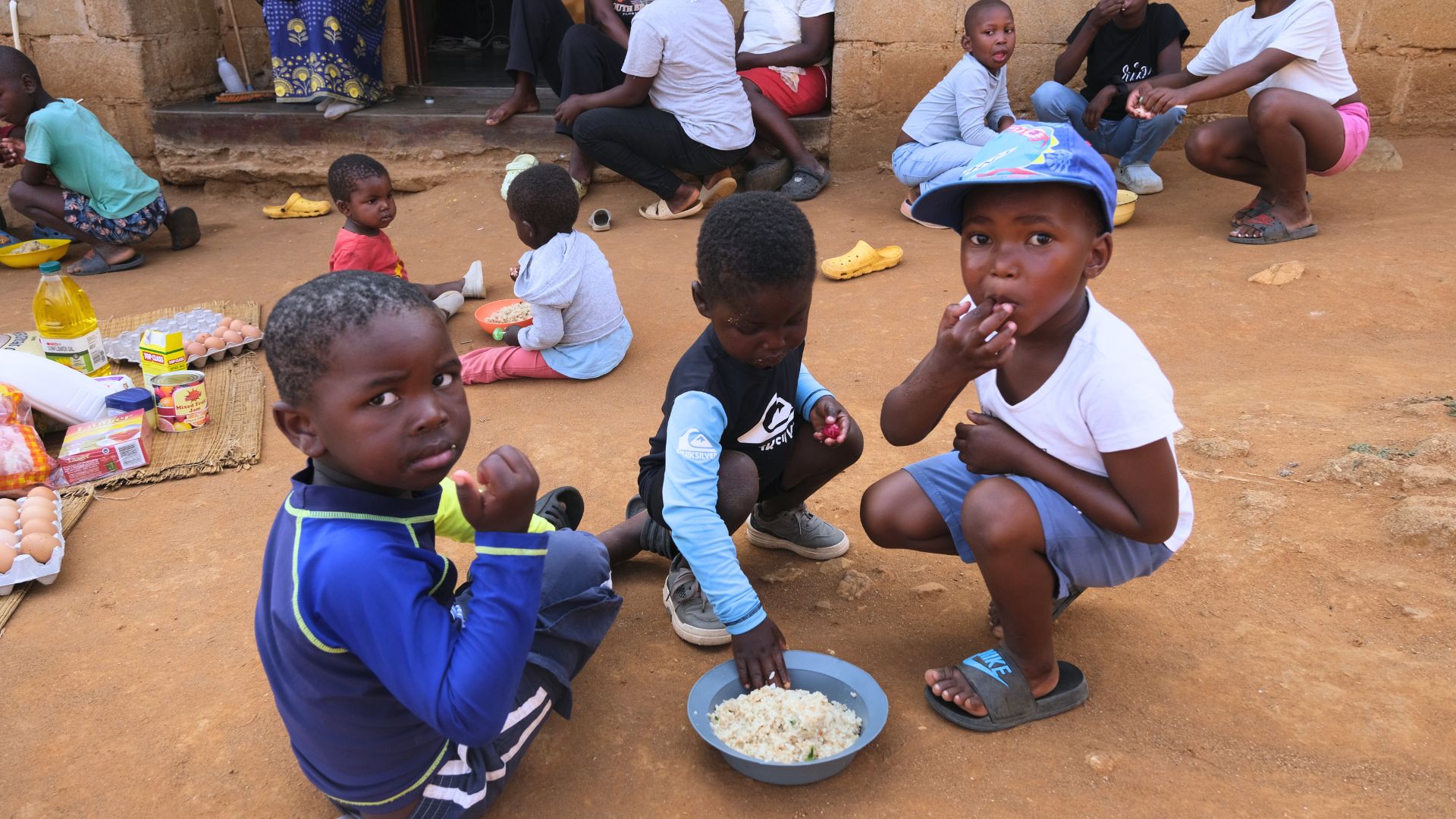
Our mission is HOPE: Hunger, Orphans, Poverty, Education. We have been working in Africa for twenty years, as our co-founders Janine and Ian Maxwell founded the organization in 2006. In 2009, we purchased 2,500 acres of land in Eswatini and dedicated it as Project Canaan: A Place of HOPE. On March 1, 2012, the first child arrived. Today, over 460 children call Project Canaan home.
Ian and Janine Maxwell have lived in Eswatini since June 1, 2012. Over 400 people from surrounding Swazi communities are employed at Project Canaan, each supporting approximately seven family members at home. That is a direct economic reach of more than 2,800 people in the region.
When programs were not working financially, we paused them and told our donors why. Our dairy operation, parts of our farm, areas of our carpentry program. Hard decisions made openly, because we believe our donors deserve the truth.
We are actively building commercial revenue opportunities through our vanilla project, vegetable exports to South Africa under GlobalGAP certification, and more, specifically to reduce our dependence on donations over time. That is our sustainability plan in action.
In 2012, 22 children were placed in our care. Today we care for over 460 children full time on site. Project Canaan Academy currently teaches through Grade 8, growing a new grade level every year as our children grow. Around 2030, our first cohort will graduate. The Bridge Program will be there to walk them into adulthood.
That is how we answer the question about whether we are building something that lasts.
We’d encourage you to hold us to every question in this article and learn more about us, here. The right charity for you is the one that can answer them well.
If you’d like to support the work being built at Project Canaan in Eswatini, we’d love to have you with us.