


The question behind child sponsorship
How do you build a daily schedule for a large group of children?
Whether it is a school, a camp, or a childcare program, the challenge is often the same. You are balancing different ages, activities, energy levels, and limited space, all within a single day that needs to feel structured but not rigid.
Now imagine doing that for more than 460 children! At Project Canaan in the Kingdom of Eswatini, this is not a planning exercise. It is everyday life.
Project Canaan is a children’s community where more than 460 children are raised in a structured, family-style environment. Each day includes education, physical activity, creative development, and time for rest and relationships, all woven together across a large and active campus.
What does that actually look like in practice? The best way to understand it is to step into the day itself.
Morning: A Quiet Start That Quickly Fills
In the earlier hours, the youngest children gather in spaces designed for learning through play. There is movement, but it is steady and the day is just beginning to take shape.
Not far away, older children are settling into classrooms. Books open. Lessons begin. The structure of the school day provides a steady foundation for everything that follows.
As the morning moves forward, the campus begins to spread out.
A group of children heads toward a music room where a short lesson is already underway. In another area, children are arriving for swim lessons, lining up along the pool as coaches guide them through the session. Nearby, a small group sits together in a study space, focused and quiet.
These moments happen side by side. Children are not moving through one shared activity, rather they are moving through many, all at once.
Midday: Movement Across the Property
By midday, the pace has picked up.
Groups shift from one activity to another. A child finishing a swim lesson dries off and moves toward the next part of the day. Another leaves a classroom and joins a small group for music. Others gather in shaded areas or indoor spaces for focused study time.
There is a natural rhythm to the movement as children walk between buildings, staff guide transitions and laughter carries across open spaces as some groups move toward recreational activities, while others remain in quieter settings.
Across the property, different age groups are experiencing completely different parts of the day at the same time.
Younger children might still be in early learning environments. Primary school students are moving between lessons and activities. Older children are beginning to take part in more structured group discussions or mentorship time.
Each part of the day overlaps with another.
Afternoon: Energy, Activity, and Community
As the afternoon unfolds, the energy shifts again. Outdoor spaces fill with activity as games begin! Some children gather for organized sports, while others move toward areas set up for free play. Trampolines, playgrounds, and open fields become part of the afternoon landscape.
Elsewhere, smaller groups continue with lessons. You can hear music carry from one building where guitar lessons are taking place to another where children gather for praise and worship practice.
There are also moments that feel like everyday life.
A birthday is normally on the schedule to be celebrated (with 460+ children you can imagine how often birthday cake is on the menu). There is laughter, conversation, and a pause in the routine before the day continues.
Older children begin heading toward activities like bike riding at the track, where helmets are checked and staff walk alongside them. Others gather indoors for games, taking turns and spending time together between scheduled activities.
Nothing feels rushed, but nothing is idle either. The day continues to move.
Evening Rhythm: Slowing Down Without Stopping
As the day moves toward evening, the pace begins to settle. Activities wind down and the children return to their homes across the property. The structured parts of the day give way to a quieter rhythm.
The movement of the day begins to close, making space for rest and preparation for the next morning, when it will all begin again.
Weekends: A Different Kind of Day
Weekends feel different almost immediately. The structure is still there, but it opens up.
The morning might begin with a community fun run, with groups gathering early before the day warms up. From there, children spread out across the property again, but this time the activities feel lighter.
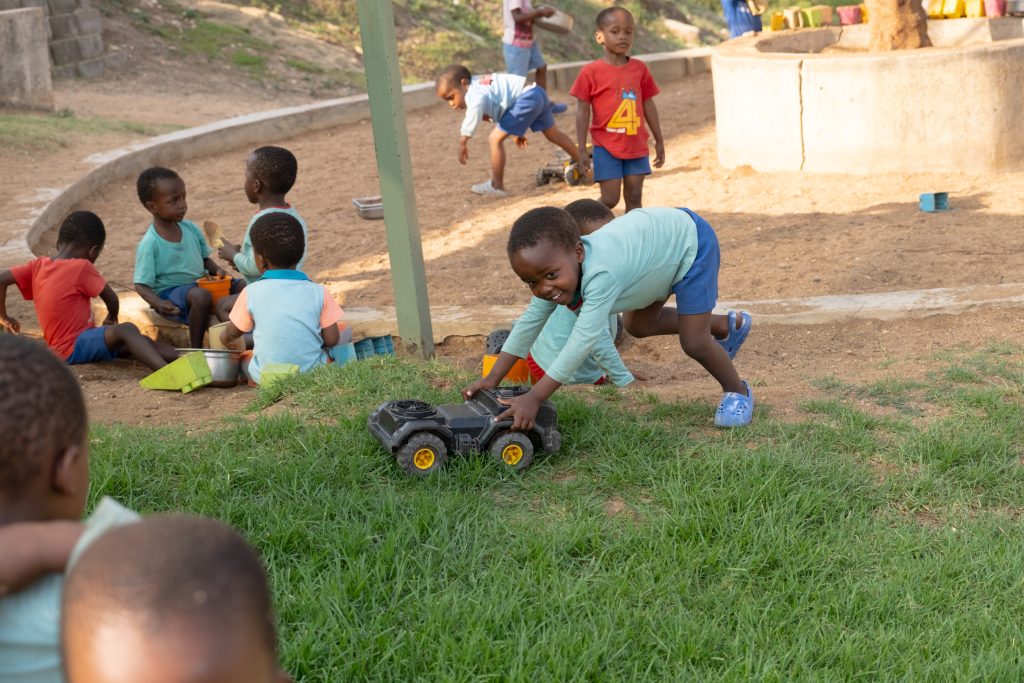
Soccer games begin on open fields. Volleyball nets are set up. Younger children find their way to sandboxes, playgrounds, or shaded areas where they can play freely.
Music continues, but in a different way. Piano and guitar lessons take place throughout the day, with children moving in and out of sessions at a more relaxed pace.
Some children gather for Kids Club, while others meet with counselors in quieter spaces, having conversations that are harder to fit into the weekday schedule.
Overall, there is a lot more choice in how time is spent.
Older children might join a game, take part in a group discussion hang out, or spend time with friends in shared spaces. Staff remain present, guiding and supervising, but the day allows for more flexibility.
In the afternoon, choir practice brings voices together, sports continue, bike riding sessions rotate through groups and indoor spaces fill with games and conversation. And of course, a birthday is often being celebrated!
Weekends are not unstructured, but they are definitely shaped differently.
What a Day Like This Represents
From the outside, it can be difficult to picture what daily life in a children’s community actually looks like. Building a schedule as complex as what is needed at Project Canaan is not for the faint of heart when there are so many activities, programs and children to coordinate with, but we love it.
It is a full day made up of many small moments. Children moving between spaces to learn, play, rest, and grow within a rhythm that repeats and evolves over time.
At Project Canaan, that rhythm is what shapes daily life.
What It Takes to Build a Schedule Like This
For anyone planning a schedule for a school, camp, classroom, or children’s program, the challenge is often the same: how do you create structure while still allowing space for flexibility?
While every environment is different, a few principles consistently help when building schedules for large groups of children:
- Start with the flow of the day: Plan around energy levels. Mornings tend to support focused learning, while afternoons work better for movement, creativity, and social activities.
- Group children by age and stage: Younger children need shorter, flexible activities. Older children can engage in longer, more structured blocks. Aligning schedules with development makes the day more effective.
- Use rotating activity blocks: Instead of doing everything at once, move groups through activities in waves. This helps manage space, reduce crowding, and improve attention within each activity.
- Build in transition time: Moving between activities takes time. Walking, resetting spaces, and getting settled all matter. Planning for transitions keeps the day from feeling rushed.
- Balance structure with free choice: A strong schedule provides consistency, but children also benefit from time to choose activities, explore interests, and interact more freely.
- Plan for flexibility: No schedule runs perfectly. Weather, timing, and individual needs require adjustment. Build in margin so the day can adapt without breaking down.
- Think beyond the paper schedule: A schedule works best when staff understand the rhythm of the day, communicate clearly, and can guide movement between activities smoothly.
Stay Connected
If you would like to continue seeing what life looks like at Project Canaan, we invite you to stay connected.
Sign up for our newsletter to receive updates, stories, and a closer look at the day-to-day life of the children in our care.