
People used to mix up Swaziland with Switzerland all the time. The country (Swaziland) is actually called Eswatini now, which may have cleared up some of that confusion, but most people still don’t know much about it at all. We get the same questions again and again, from donors, from people who stumble onto our work, from anyone just trying to figure out where this place actually is. So, let’s dive in and talk about this country we love dearly.
Where Is Eswatini?
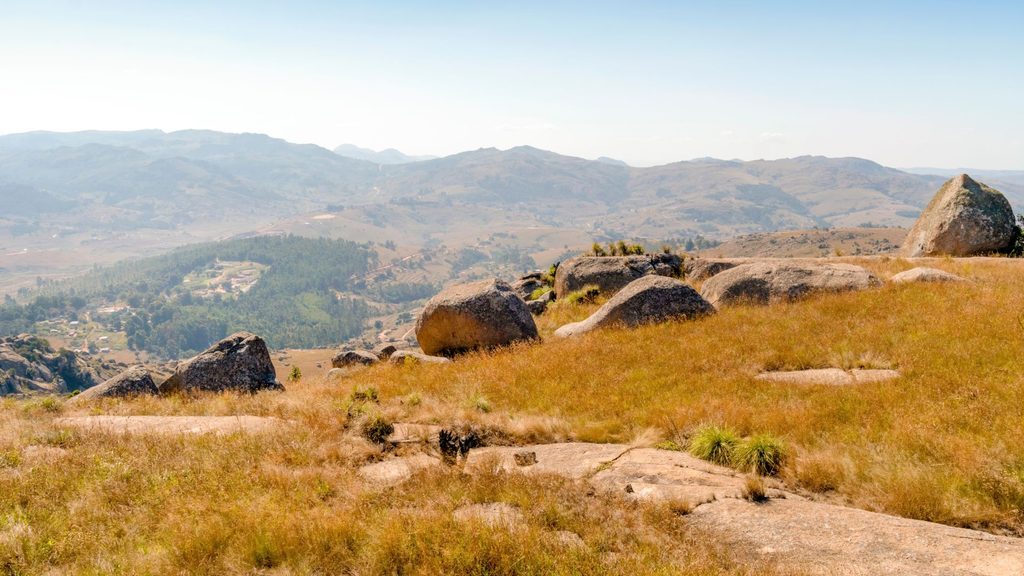
Eswatini is a small, landlocked country in Southern Africa, tucked between South Africa and Mozambique. At its widest, it stretches about 120 miles north to south and 80 miles east to west, small enough to cross the narrower direction in under two hours by car. The landscape shifts dramatically across that short distance too, from cool, mountainous highlands in the west to hot, dry lowveld in the east. Project Canaan sits in the Middleveld, the fertile, densely populated band in between.
Why Did Swaziland Change Its Name to Eswatini?
In April 2018, King Mswati III announced that the country formerly known as Swaziland would be called Eswatini going forward, timed to mark the 50th anniversary of independence from British rule. Eswatini is the country’s name in siSwati, and the change was framed as a return to a pre-colonial identity, the same kind of shift Zimbabwe, Zambia, and Namibia made decades earlier. There was a simpler reason too. Swaziland was routinely confused with Switzerland, mail included, and the King said as much when he made the announcement.
What Language Do People Speak There?
siSwati and English are both official languages. Most Swazis grow up speaking siSwati at home, and English is used widely in schools, government, and business. That’s part of why it isn’t difficult for our staff, partners, and visitors from the US and Canada to communicate and build real relationships on the ground.
What Kind of Government Does Eswatini Have?
Eswatini is one of the world’s last remaining absolute monarchies. King Mswati III has ruled since 1986, with a Prime Minister and Parliament operating underneath him, though final authority still sits with the King. It’s a structure that shapes daily life in ways that are easy to miss from the outside, and it’s worth understanding if you’re trying to make sense of the country as a whole.
Is Eswatini Safe?
For visitors, Eswatini is generally a warm, welcoming place. Most trips here are trouble-free, and the kind of risk a tourist is most likely to run into is ordinary petty crime, the same as you’d find visiting most cities anywhere in the world.
The reality for many Swazis living in rural communities is harder. Poverty runs deep there, and it comes with real consequences, including gender-based violence rates that remain a serious concern. Unfortunately, this is part of the daily reality in the communities surrounding Project Canaan, and part of why this work matters as much as it does.
What Challenges Does Eswatini Face?
Eswatini carries some of the toughest statistics in the world, and we don’t see much point in softening them. According to the IMF, 59% of the population lives below the poverty line, and unemployment sits at 34% nationally, climbing to 58% among young people. The country also has the highest HIV prevalence in the world, with UNAIDS estimating that roughly one in four adults is living with HIV. Our own team, working directly alongside social welfare offices and community partners day to day, regularly sees unemployment closer to 70% in the rural areas where we operate. Numbers like these are exactly why Heart for Africa has spent nearly two decades building something that lasts longer than a single response to a single crisis.
Why We’re Here
We started this work because Eswatini’s need for reliable systems, in food, in education, in family stability, was as real as any of these statistics suggest. If any of this made you curious about the country or the work, we’d love for you to keep exploring and see what a different kind of response looks like.