

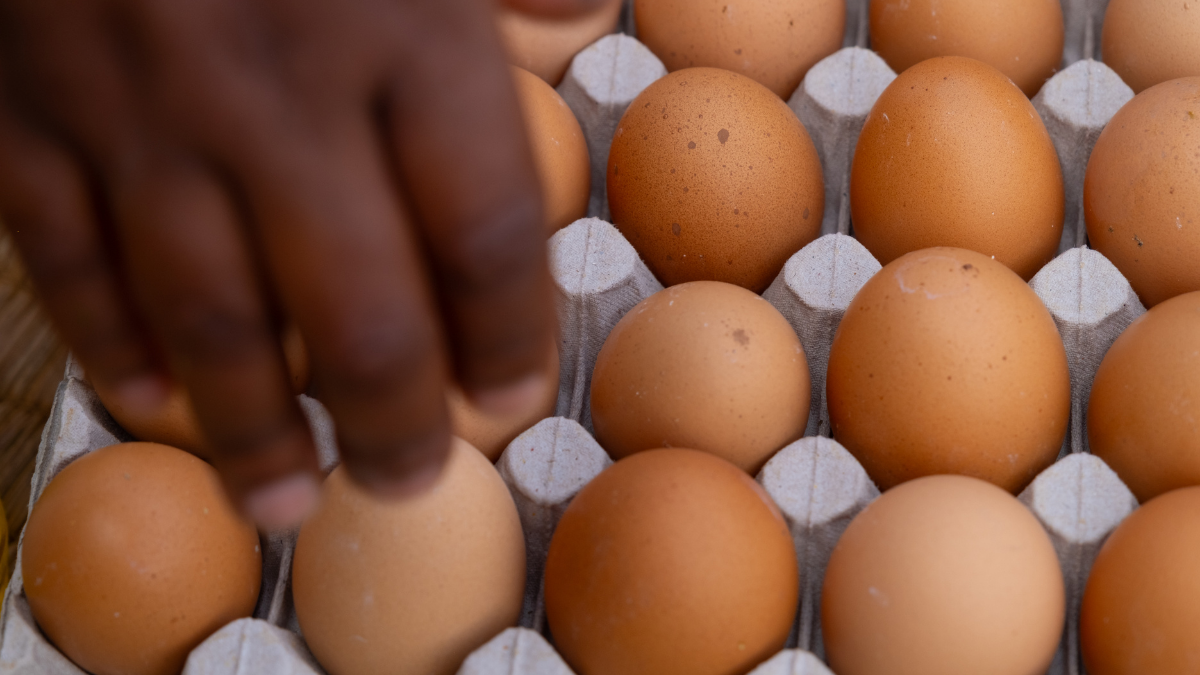
Twice a month, a truck loaded with eggs and MannaPack® meal packets leaves Project Canaan and doesn’t stop until it has covered over 1,550 miles, delivering to 31 different communities across Eswatini. There’s no refrigeration on board and at the height of summer, temperatures along these routes regularly climb past 90°F. By any normal standard, the eggs shouldn’t survive the trip.
That’s the problem we had to solve. Protein is one of the most complete forms of nutrition available to a growing child, and eggs are one of the most efficient ways to deliver it. But most of the communities we serve don’t have reliable electricity, let alone the kind of cold storage a typical food supply chain depends on. A traditional model, built around refrigerated trucks and cold storage warehouses, was never going to work here.
Why This Matters in Eswatini Right Now
According to UNICEF, an estimated 150,643 children under five in Eswatini, about 13.3 percent of the country’s population, are affected by stunting, a marker of chronic malnutrition. Roughly a quarter of children under five are short for their age as a result. The regions hit hardest, Shiselweni and Lubombo, sit close to many of the rural communities our Hunger Initiative serves.
Numbers like these move when something changes about how food actually reaches a child, not just how much food exists somewhere in the country.
How We Solved the Cold Chain Problem
This started with hens, long before we knew we’d need to solve a logistics problem too. Two egg barns went up on Project Canaan in 2015, and by the following year we had introduced close to 6,000 laying hens. Producing the eggs turned out to be the easy part. Getting them safely to the communities that needed them was the real challenge.
So, we worked with international egg industry partners to develop something different: a process to hard-boil and preserve eggs directly in their shell, extending their shelf life to up to 30 days without any refrigeration at all. It became fully operational in August 2017. A chiller added in 2019 sped up the cooling process and tightened quality control even further, but the core innovation, the part that actually solved the problem, was the preservation process itself. An egg that can sit safely for a month doesn’t need a cold truck. It just needs a truck.
What This Looks Like at Scale Today
That single shift changed what was possible. Today, this system supports delivery to 31 rural community feeding partners and more than 10 social welfare offices across Eswatini. Eggs travel alongside MannaPack® meal packets, provided through our longtime partnership with Feed My Starving Children, on the same twice-monthly route. More than 15 million eggs have been delivered through it to date, supporting over 100,000 meals every month and reaching over 6,500 children monthly with reliable protein, most of whom live well beyond Project Canaan’s own gates.
Sihoye
Pastor Saint Dlamini leads a church about two hours from Project Canaan, in a part of the country that’s remote even by Eswatini’s standards, dry and difficult to farm. When his church first began feeding children, fewer than 100 came, five days a week. Then eggs entered the program.
Today, that same church feeds 800 children, seven days a week. 60% of them are orphaned or vulnerable children with no other guaranteed source of a meal. The congregation grew large enough that the church has opened more than five sub-branches to reach families across the wider region. And the reliability of the program built something else too: trust. A nearby school asked, unprompted, whether the church could extend feeding to its students as well. It did. Teachers there report real, measurable improvements in the health and concentration of the children now receiving those meals.
That growth came from a truck loaded with eggs and MannaPack®, showing up without a refrigerator on schedule, month after month, for years, not from any announcement or campaign.
Humbled Through Recognition
This past year, a panel of supply chain professionals reviewed this system alongside submissions from organizations across the continent, most of them commercial operations solving very different kinds of problems. At the 2026 Africa Supply Chain Excellence Awards, our work was awarded Platinum in the Humanitarian and Health Supply Chain category, the only organization to receive that distinction this year. Recognition was never the goal, but it’s a good outside confirmation that solving a real problem, even a quiet one, tends to hold up under scrutiny.
What It Actually Takes
There’s a version of this story that’s just about eggs. But the truth is that feeding a child reliably, month after month, in a place with no refrigeration and hours of unreliable road between where food is grown and where a hungry child is waiting, takes more than good intentions. It takes engineering, partnerships and a willingness to solve the boring, unglamorous parts of the problem, the shelf life, the distribution route, the delivery schedule, because those are the parts that actually determine whether a child eats.
Our Hunger Initiative keeps growing because communities keep asking, and because the model keeps working. If you’d like to be part of what keeps that truck moving twice a month, every month, you can learn more about supporting our work by clicking below.